传输线中的电磁波模式简介
来源:射频学堂发布时间:2022-11-212437浏览
询问 AI大家好,今天继续我们的射频入门学习。
Hello everyone, today we continue our RF Introduction.
Hello everyone, today we continue our RF Introduction.
Hello everyone, today we continue our RF Introduction.
Hello everyone, today we continue our RF Introduction.
Hello everyone, today we continue our RF Introduction.
在《同轴线》一文中,我们详细介绍了同轴线的相关知识,并介绍了同轴线中的电磁波的模式:TEM模,TE模和TM模。很多同学对电磁波的模式可能有些迷糊,今天我们一起来学习一下,解开大家的迷糊。
In the article "Coaxial Line," we introduce the related knowledge of the coaxial line in detail, and introduce the electromagnetic wave mode in the coaxial line:TEM mode, TE mode and TM mode.Many students may be confused about the mode of electromagnetic waves. Today, let's learn together and solve everyone's confusion.
In the article "Coaxial Line," we introduce the related knowledge of the coaxial line in detail, and introduce the electromagnetic wave mode in the coaxial line:TEM mode, TE mode and TM mode.Many students may be confused about the mode of electromagnetic waves. Today, let's learn together and solve everyone's confusion.
In the article "Coaxial Line," we introduce the related knowledge of the coaxial line in detail, and introduce the electromagnetic wave mode in the coaxial line:TEM mode, TE mode and TM mode.Many students may be confused about the mode of electromagnetic waves. Today, let's learn together and solve everyone's confusion.
In the article "Coaxial Line," we introduce the related knowledge of the coaxial line in detail, and introduce the electromagnetic wave mode in the coaxial line:TEM mode, TE mode and TM mode.Many students may be confused about the mode of electromagnetic waves. Today, let's learn together and solve everyone's confusion.
In the article "Coaxial Line," we introduce the related knowledge of the coaxial line in detail, and introduce the electromagnetic wave mode in the coaxial line:TEM mode, TE mode and TM mode.Many students may be confused about the mode of electromagnetic waves. Today, let's learn together and solve everyone's confusion.
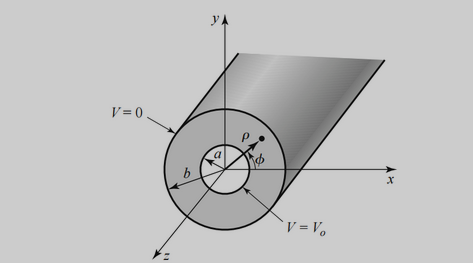
电磁波的模式是指在导波系统中能够单独存在的电磁场的结构或者分布,所以又称为波型。通常根据模式是否具有纵向分量,主要分为两大类。这里的纵向分量就是指沿着传输方向的分量,一般在坐标系中用z-轴表示,如下图所示,同轴线的坐标系示意图。
The mode of electromagnetic wave refers to the structure or distribution of electromagnetic field that can exist alone in the guided wave system, so it is also called wave mode.There are generally two main categories of patterns, depending on whether they have a longitudinal component.The longitudinal component here refers to the component along the transmission direction, which is generally expressed by z-axis in the coordinate system, as shown in the following figure, which is the schematic diagram of the coordinate system of coaxial line.
The mode of electromagnetic wave refers to the structure or distribution of electromagnetic field that can exist alone in the guided wave system, so it is also called wave mode.There are generally two main categories of patterns, depending on whether they have a longitudinal component.The longitudinal component here refers to the component along the transmission direction, which is generally expressed by z-axis in the coordinate system, as shown in the following figure, which is the schematic diagram of the coordinate system of coaxial line.
The mode of electromagnetic wave refers to the structure or distribution of electromagnetic field that can exist alone in the guided wave system, so it is also called wave mode.There are generally two main categories of patterns, depending on whether they have a longitudinal component.The longitudinal component here refers to the component along the transmission direction, which is generally expressed by z-axis in the coordinate system, as shown in the following figure, which is the schematic diagram of the coordinate system of coaxial line.
The mode of electromagnetic wave refers to the structure or distribution of electromagnetic field that can exist alone in the guided wave system, so it is also called wave mode.There are generally two main categories of patterns, depending on whether they have a longitudinal component.The longitudinal component here refers to the component along the transmission direction, which is generally expressed by z-axis in the coordinate system, as shown in the following figure, which is the schematic diagram of the coordinate system of coaxial line.
The mode of electromagnetic wave refers to the structure or distribution of electromagnetic field that can exist alone in the guided wave system, so it is also called wave mode.There are generally two main categories of patterns, depending on whether they have a longitudinal component.The longitudinal component here refers to the component along the transmission direction, which is generally expressed by z-axis in the coordinate system, as shown in the following figure, which is the schematic diagram of the coordinate system of coaxial line.
第一类是无纵向分量,即磁场和电场都没有纵向分量,这样电磁波只具有横向电场和横向磁场分量,所以称为横电磁模或者横电磁波,英文缩写为TEM模。TEM模的电磁场分量处于传输线的横截面内,只能由两个或者两个以上的导体构成,比如 上文所学的同轴线,平行双线,带状线等。
The first type is no longitudinal component, that is, the magnetic field and electric field have no longitudinal component, so the electromagnetic wave only has transverse electric field and transverse magnetic field components, so it is called transverse electromagnetic mode or transverse electromagnetic wave, abbreviated as TEM mode in English.the electromagnetic field component of the TEM mode lies in the cross-section of the transmission line and can only be formed by two or more conductors, such as coaxial lines, parallel lines, striplines, etc. as discussed above.
The first type is no longitudinal component, that is, the magnetic field and electric field have no longitudinal component, so the electromagnetic wave only has transverse electric field and transverse magnetic field components, so it is called transverse electromagnetic mode or transverse electromagnetic wave, abbreviated as TEM mode in English.the electromagnetic field component of the TEM mode lies in the cross-section of the transmission line and can only be formed by two or more conductors, such as coaxial lines, parallel lines, striplines, etc. as discussed above.
The first type is no longitudinal component, that is, the magnetic field and electric field have no longitudinal component, so the electromagnetic wave only has transverse electric field and transverse magnetic field components, so it is called transverse electromagnetic mode or transverse electromagnetic wave, abbreviated as TEM mode in English.the electromagnetic field component of the TEM mode lies in the cross-section of the transmission line and can only be formed by two or more conductors, such as coaxial lines, parallel lines, striplines, etc. as discussed above.
The first type is no longitudinal component, that is, the magnetic field and electric field have no longitudinal component, so the electromagnetic wave only has transverse electric field and transverse magnetic field components, so it is called transverse electromagnetic mode or transverse electromagnetic wave, abbreviated as TEM mode in English.the electromagnetic field component of the TEM mode lies in the cross-section of the transmission line and can only be formed by two or more conductors, such as coaxial lines, parallel lines, striplines, etc. as discussed above.
The first type is no longitudinal component, that is, the magnetic field and electric field have no longitudinal component, so the electromagnetic wave only has transverse electric field and transverse magnetic field components, so it is called transverse electromagnetic mode or transverse electromagnetic wave, abbreviated as TEM mode in English.the electromagnetic field component of the TEM mode lies in the cross-section of the transmission line and can only be formed by two or more conductors, such as coaxial lines, parallel lines, striplines, etc. as discussed above.
对于同轴线来说,在横截面上电场从一个导体指向另一个导体,磁场则环绕内导体。在传输方向上,电场或者磁场周期分布。
in that case of a coaxial wire, the electric field is direct from one conductor to the other in the cross-section, and the magnetic field surrounds the inn conductor.in that transport direction the electric or magnetic field is distribute periodically.
in that case of a coaxial wire, the electric field is direct from one conductor to the other in the cross-section, and the magnetic field surrounds the inn conductor.in that transport direction the electric or magnetic field is distribute periodically.
in that case of a coaxial wire, the electric field is direct from one conductor to the other in the cross-section, and the magnetic field surrounds the inn conductor.in that transport direction the electric or magnetic field is distribute periodically.
in that case of a coaxial wire, the electric field is direct from one conductor to the other in the cross-section, and the magnetic field surrounds the inn conductor.in that transport direction the electric or magnetic field is distribute periodically.
in that case of a coaxial wire, the electric field is direct from one conductor to the other in the cross-section, and the magnetic field surrounds the inn conductor.in that transport direction the electric or magnetic field is distribute periodically.
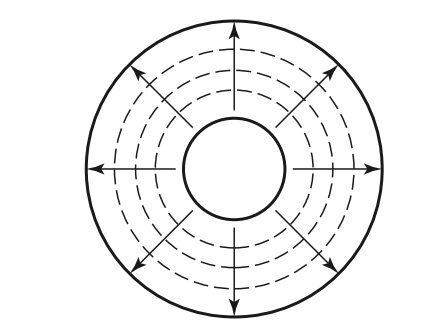
TEM 模电场和磁场的分布(虚线表示磁场,实线表示电场)
Distribution of electric field and magnetic field of TEM mode (dotted line indicates magnetic field, solid line indicates electric field)
Distribution of electric field and magnetic field of TEM mode (dotted line indicates magnetic field, solid line indicates electric field)
Distribution of electric field and magnetic field of TEM mode (dotted line indicates magnetic field, solid line indicates electric field)
Distribution of electric field and magnetic field of TEM mode (dotted line indicates magnetic field, solid line indicates electric field)
Distribution of electric field and magnetic field of TEM mode (dotted line indicates magnetic field, solid line indicates electric field)
第二大类就是有纵向分量,这里面又可以分为三小类。
The second category is vertical component, which can be divided into three categories.
The second category is vertical component, which can be divided into three categories.
The second category is vertical component, which can be divided into three categories.
The second category is vertical component, which can be divided into three categories.
The second category is vertical component, which can be divided into three categories.
①,电场有纵向分量,而磁场只有横向分量,这样的电磁波称为横磁模——TM模/TM波;因为纵向只有电场分量,所以又叫做电波, 电模,简记为 E波或者E模。所以呢,当大家在文献中看到TM模或者E模的时候,不要迷糊,这两个就是一个东西,两个名称而已。横磁模的磁力线在传输线横截面为闭合曲线,而电力线则为空间曲线。
①, the electric field has longitudinal component, while the magnetic field only has transverse component. Such electromagnetic wave is called transverse magnetic mode_TM mode/TM wave;because there is only electric field component in the longitudinal direction, it is also called electric wave or electric mode, which is abbreviated as E wave or E mode.So, when you see TM mode or E mode in the literature, don't be confused, these two are just one thing, two names.The magnetic field lines of the transverse magnetic mode are closed curves in the cross section of the transmission line, while the electric field lines are space curves.
①, the electric field has longitudinal component, while the magnetic field only has transverse component. Such electromagnetic wave is called transverse magnetic mode_TM mode/TM wave;because there is only electric field component in the longitudinal direction, it is also called electric wave or electric mode, which is abbreviated as E wave or E mode.So, when you see TM mode or E mode in the literature, don't be confused, these two are just one thing, two names.The magnetic field lines of the transverse magnetic mode are closed curves in the cross section of the transmission line, while the electric field lines are space curves.
①, the electric field has longitudinal component, while the magnetic field only has transverse component. Such electromagnetic wave is called transverse magnetic mode_TM mode/TM wave;because there is only electric field component in the longitudinal direction, it is also called electric wave or electric mode, which is abbreviated as E wave or E mode.So, when you see TM mode or E mode in the literature, don't be confused, these two are just one thing, two names.The magnetic field lines of the transverse magnetic mode are closed curves in the cross section of the transmission line, while the electric field lines are space curves.
①, the electric field has longitudinal component, while the magnetic field only has transverse component. Such electromagnetic wave is called transverse magnetic mode_TM mode/TM wave;because there is only electric field component in the longitudinal direction, it is also called electric wave or electric mode, which is abbreviated as E wave or E mode.So, when you see TM mode or E mode in the literature, don't be confused, these two are just one thing, two names.The magnetic field lines of the transverse magnetic mode are closed curves in the cross section of the transmission line, while the electric field lines are space curves.
①, the electric field has longitudinal component, while the magnetic field only has transverse component. Such electromagnetic wave is called transverse magnetic mode_TM mode/TM wave;because there is only electric field component in the longitudinal direction, it is also called electric wave or electric mode, which is abbreviated as E wave or E mode.So, when you see TM mode or E mode in the literature, don't be confused, these two are just one thing, two names.The magnetic field lines of the transverse magnetic mode are closed curves in the cross section of the transmission line, while the electric field lines are space curves.
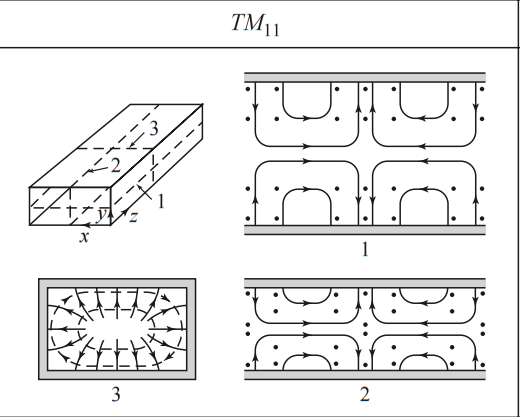
TM11 模电场和磁场的分布(虚线表示磁场,实线表示电场)
Distribution of electric field and magnetic field of TM11 mode (dotted line indicates magnetic field, solid line indicates electric field)
Distribution of electric field and magnetic field of TM11 mode (dotted line indicates magnetic field, solid line indicates electric field)
Distribution of electric field and magnetic field of TM11 mode (dotted line indicates magnetic field, solid line indicates electric field)
Distribution of electric field and magnetic field of TM11 mode (dotted line indicates magnetic field, solid line indicates electric field)
Distribution of electric field and magnetic field of TM11 mode (dotted line indicates magnetic field, solid line indicates electric field)
同样的,如果磁场有纵向分量,电场只有横向分量的话,这样的电磁波就是横电模——TE 模/TE 波;因为磁场有纵向分量,所以又叫做磁模或者磁波,H模或者H波。TE模的电场线在传输线的横截面上分布。
Similarly, if the magnetic field has a longitudinal component and the electric field has only a transverse component, such an electromagnetic wave is a transverse electric mode-TE mode/TE wave;because the magnetic field has a longitudinal component, it is also called a magnetic mode or magnetic wave, H mode or H wave.the electric field lines of the TE mode are distributed over the cross-section of the transmission line.
Similarly, if the magnetic field has a longitudinal component and the electric field has only a transverse component, such an electromagnetic wave is a transverse electric mode-TE mode/TE wave;because the magnetic field has a longitudinal component, it is also called a magnetic mode or magnetic wave, H mode or H wave.the electric field lines of the TE mode are distributed over the cross-section of the transmission line.
Similarly, if the magnetic field has a longitudinal component and the electric field has only a transverse component, such an electromagnetic wave is a transverse electric mode-TE mode/TE wave;because the magnetic field has a longitudinal component, it is also called a magnetic mode or magnetic wave, H mode or H wave.the electric field lines of the TE mode are distributed over the cross-section of the transmission line.
Similarly, if the magnetic field has a longitudinal component and the electric field has only a transverse component, such an electromagnetic wave is a transverse electric mode-TE mode/TE wave;because the magnetic field has a longitudinal component, it is also called a magnetic mode or magnetic wave, H mode or H wave.the electric field lines of the TE mode are distributed over the cross-section of the transmission line.
Similarly, if the magnetic field has a longitudinal component and the electric field has only a transverse component, such an electromagnetic wave is a transverse electric mode-TE mode/TE wave;because the magnetic field has a longitudinal component, it is also called a magnetic mode or magnetic wave, H mode or H wave.the electric field lines of the TE mode are distributed over the cross-section of the transmission line.
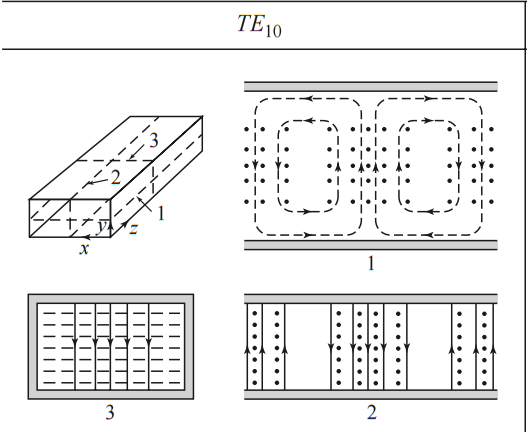
TE10 模电场和磁场的分布(虚线表示磁场,实线表示电场)
Distribution of electric field and magnetic field of TE10 mode (dotted line indicates magnetic field, solid line indicates electric field)
Distribution of electric field and magnetic field of TE10 mode (dotted line indicates magnetic field, solid line indicates electric field)
Distribution of electric field and magnetic field of TE10 mode (dotted line indicates magnetic field, solid line indicates electric field)
Distribution of electric field and magnetic field of TE10 mode (dotted line indicates magnetic field, solid line indicates electric field)
Distribution of electric field and magnetic field of TE10 mode (dotted line indicates magnetic field, solid line indicates electric field)
还有一种是电场和磁场在传输方向上都有分量,这类模式称为混合模或者混合波,电磁模 EH模,和磁电模 HE模,以及纵截面磁模 LSM模和纵截面电模 LSE模等都是混合模。混合模可以看成是TE模和TM模的线性叠加。混合模主要存在于开放传输系统或者不规则传输系统中。
There is also a mode in which both the electric field and the magnetic field have components in the propagation direction. This kind of mode is called mixed mode or mixed wave. Electromagnetic mode EH mode, magnetoelectric mode HE mode, longitudinal section magnetic mode LSM mode and longitudinal section electric mode LSE mode are all mixed modes.The mixed mode can be regarded as the linear superposition of TE mode and TM mode.The hybrid mode mainly exists in an open transmission system or an irregular transmission system.
There is also a mode in which both the electric field and the magnetic field have components in the propagation direction. This kind of mode is called mixed mode or mixed wave. Electromagnetic mode EH mode, magnetoelectric mode HE mode, longitudinal section magnetic mode LSM mode and longitudinal section electric mode LSE mode are all mixed modes.The mixed mode can be regarded as the linear superposition of TE mode and TM mode.The hybrid mode mainly exists in an open transmission system or an irregular transmission system.
There is also a mode in which both the electric field and the magnetic field have components in the propagation direction. This kind of mode is called mixed mode or mixed wave. Electromagnetic mode EH mode, magnetoelectric mode HE mode, longitudinal section magnetic mode LSM mode and longitudinal section electric mode LSE mode are all mixed modes.The mixed mode can be regarded as the linear superposition of TE mode and TM mode.The hybrid mode mainly exists in an open transmission system or an irregular transmission system.
There is also a mode in which both the electric field and the magnetic field have components in the propagation direction. This kind of mode is called mixed mode or mixed wave. Electromagnetic mode EH mode, magnetoelectric mode HE mode, longitudinal section magnetic mode LSM mode and longitudinal section electric mode LSE mode are all mixed modes.The mixed mode can be regarded as the linear superposition of TE mode and TM mode.The hybrid mode mainly exists in an open transmission system or an irregular transmission system.
There is also a mode in which both the electric field and the magnetic field have components in the propagation direction. This kind of mode is called mixed mode or mixed wave. Electromagnetic mode EH mode, magnetoelectric mode HE mode, longitudinal section magnetic mode LSM mode and longitudinal section electric mode LSE mode are all mixed modes.The mixed mode can be regarded as the linear superposition of TE mode and TM mode.The hybrid mode mainly exists in an open transmission system or an irregular transmission system.
如何区分电磁模和磁电模,LSM模和LSE模呢?
How to distinguish between electromagnetic and magnetoelectric modes, LSM and LSE modes?
How to distinguish between electromagnetic and magnetoelectric modes, LSM and LSE modes?
How to distinguish between electromagnetic and magnetoelectric modes, LSM and LSE modes?
How to distinguish between electromagnetic and magnetoelectric modes, LSM and LSE modes?
How to distinguish between electromagnetic and magnetoelectric modes, LSM and LSE modes?
如果场的纵向分量以磁场为主,横向分布类似于TE模,这种混合模被称为磁电模, HE模,相反如果纵向分量以电场为主,横向分布类似于TM模,这种混合模则被称为电磁模 EH模;
If the longitudinal component of the field is dominated by magnetic field and the transverse distribution is similar to TE mode, this mixed mode is called magnetoelectric mode, HE mode, on the contrary, if the longitudinal component is dominated by electric field and the transverse distribution is similar to TM mode, this mixed mode is called electromagnetic mode EH mode;
If the longitudinal component of the field is dominated by magnetic field and the transverse distribution is similar to TE mode, this mixed mode is called magnetoelectric mode, HE mode, on the contrary, if the longitudinal component is dominated by electric field and the transverse distribution is similar to TM mode, this mixed mode is called electromagnetic mode EH mode;
If the longitudinal component of the field is dominated by magnetic field and the transverse distribution is similar to TE mode, this mixed mode is called magnetoelectric mode, HE mode, on the contrary, if the longitudinal component is dominated by electric field and the transverse distribution is similar to TM mode, this mixed mode is called electromagnetic mode EH mode;
If the longitudinal component of the field is dominated by magnetic field and the transverse distribution is similar to TE mode, this mixed mode is called magnetoelectric mode, HE mode, on the contrary, if the longitudinal component is dominated by electric field and the transverse distribution is similar to TM mode, this mixed mode is called electromagnetic mode EH mode;
If the longitudinal component of the field is dominated by magnetic field and the transverse distribution is similar to TE mode, this mixed mode is called magnetoelectric mode, HE mode, on the contrary, if the longitudinal component is dominated by electric field and the transverse distribution is similar to TM mode, this mixed mode is called electromagnetic mode EH mode;
如果沿着电磁波的传播方向(纵向)剖面上仅存在磁场的混合模则被称为纵截面磁模,LSM模;如果纵向剖面上仅存在电场的混合模则为纵截面电模, LSE模。
If only the magnetic field exists in the longitudinal section along the propagation direction (longitudinal) of the electromagnetic wave, the mixed mode is called the longitudinal magnetic mode, LSM mode;if only the electric field exists in the longitudinal section, the mixed mode is called the longitudinal electric mode, LSE mode.
If only the magnetic field exists in the longitudinal section along the propagation direction (longitudinal) of the electromagnetic wave, the mixed mode is called the longitudinal magnetic mode, LSM mode;if only the electric field exists in the longitudinal section, the mixed mode is called the longitudinal electric mode, LSE mode.
If only the magnetic field exists in the longitudinal section along the propagation direction (longitudinal) of the electromagnetic wave, the mixed mode is called the longitudinal magnetic mode, LSM mode;if only the electric field exists in the longitudinal section, the mixed mode is called the longitudinal electric mode, LSE mode.
If only the magnetic field exists in the longitudinal section along the propagation direction (longitudinal) of the electromagnetic wave, the mixed mode is called the longitudinal magnetic mode, LSM mode;if only the electric field exists in the longitudinal section, the mixed mode is called the longitudinal electric mode, LSE mode.
If only the magnetic field exists in the longitudinal section along the propagation direction (longitudinal) of the electromagnetic wave, the mixed mode is called the longitudinal magnetic mode, LSM mode;if only the electric field exists in the longitudinal section, the mixed mode is called the longitudinal electric mode, LSE mode.
混合模在实际应用中比较少,这里只了解概念即可。
Mixed mode in practical application is less, here only to understand the concept.
Mixed mode in practical application is less, here only to understand the concept.
Mixed mode in practical application is less, here only to understand the concept.
Mixed mode in practical application is less, here only to understand the concept.
Mixed mode in practical application is less, here only to understand the concept.
下一节,我们一起来学习一下波导相关的。在5G开始的时候,波导又火了一把,我觉得随着移动通信频率的升高,波导的重要性会愈发明显。
In the next section, let's learn about waveguides.At the beginning of 5G, waveguide was on fire again, and I think the importance of waveguide will become more and more obvious as mobile communication frequency rises.
In the next section, let's learn about waveguides.At the beginning of 5G, waveguide was on fire again, and I think the importance of waveguide will become more and more obvious as mobile communication frequency rises.
In the next section, let's learn about waveguides.At the beginning of 5G, waveguide was on fire again, and I think the importance of waveguide will become more and more obvious as mobile communication frequency rises.
In the next section, let's learn about waveguides.At the beginning of 5G, waveguide was on fire again, and I think the importance of waveguide will become more and more obvious as mobile communication frequency rises.
In the next section, let's learn about waveguides.At the beginning of 5G, waveguide was on fire again, and I think the importance of waveguide will become more and more obvious as mobile communication frequency rises.
新闻来源:射频学堂,文中所述为作者独立观点,不代表icspec立场。更多精彩资讯请下载icspec App。如对本稿件有异议,请联系微信客服specltkj。